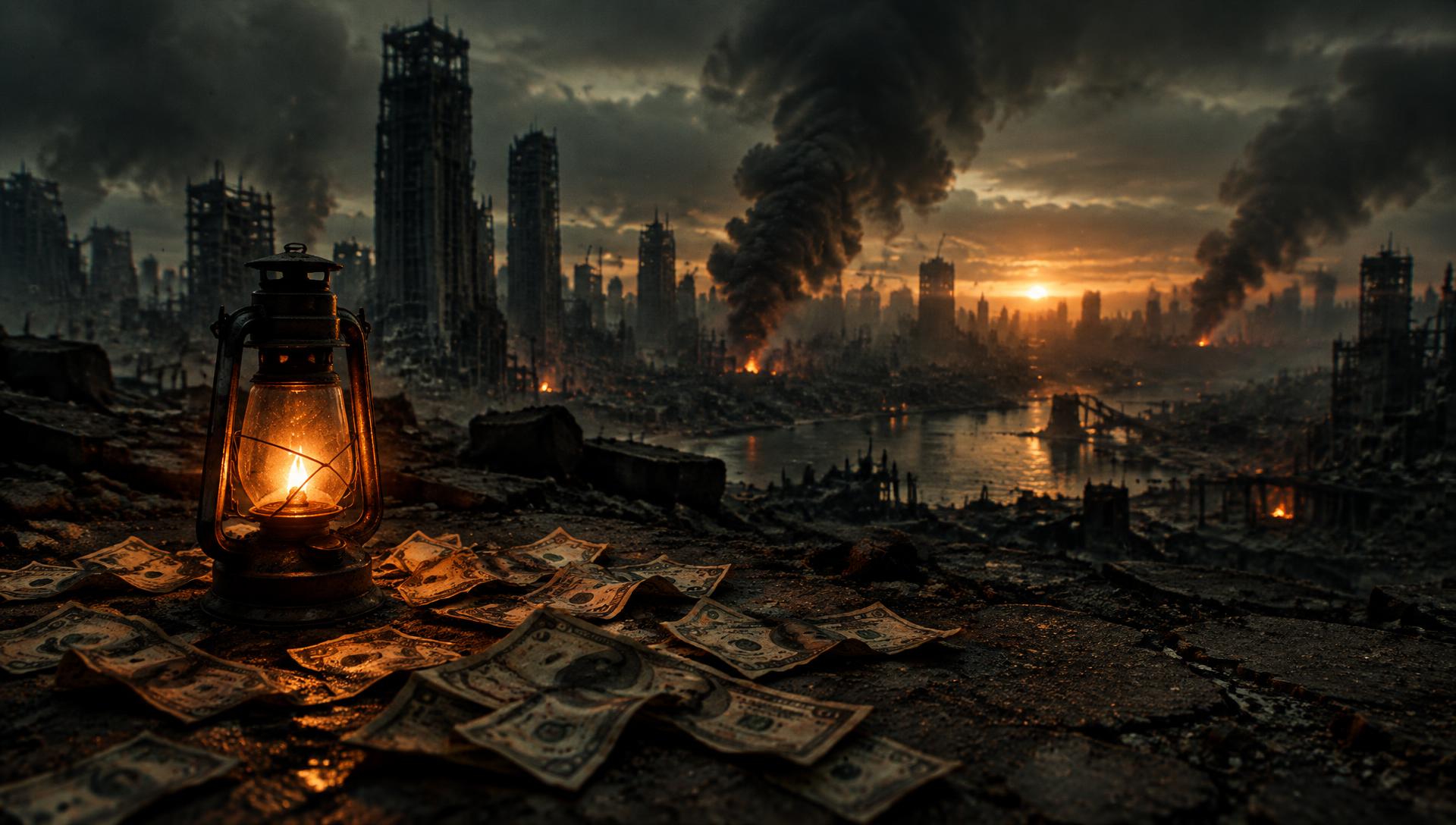
But beneath that prosperity, an increasingly complex structure of debt, financial speculation, political dependence, and technological disruption has begun to undermine the foundations of the monetary order.
The warning signs are subtle. Savings lose purchasing power. Productive work struggles to keep pace with asset ownership. Automation transforms employment. Energy becomes an increasingly strategic measure of economic power. Governments and institutions begin reconsidering what genuinely sustains the value of money.
Then a different possibility emerges. What if the future of finance no longer depended primarily on the promises of debt, but on the measurable productive foundations of civilization itself? Energy. Food. Water. Strategic materials. Transportation. Infrastructure. Essential production.
As Aurium moves toward a new monetary architecture, the transformation extends far beyond economics. Artificial intelligence begins coordinating increasingly complex systems. Digital identity becomes central to financial participation. International commerce finds new settlement mechanisms. Traditional institutions face a future in which technology can perform functions once reserved for banks, bureaucracies, and entire administrative hierarchies.
A civilization discovers that it can become extraordinarily efficient. But efficiency introduces its own questions. Who controls access? Who establishes identity? Who protects freedom? And what happens to those who cannot — or will not — participate?
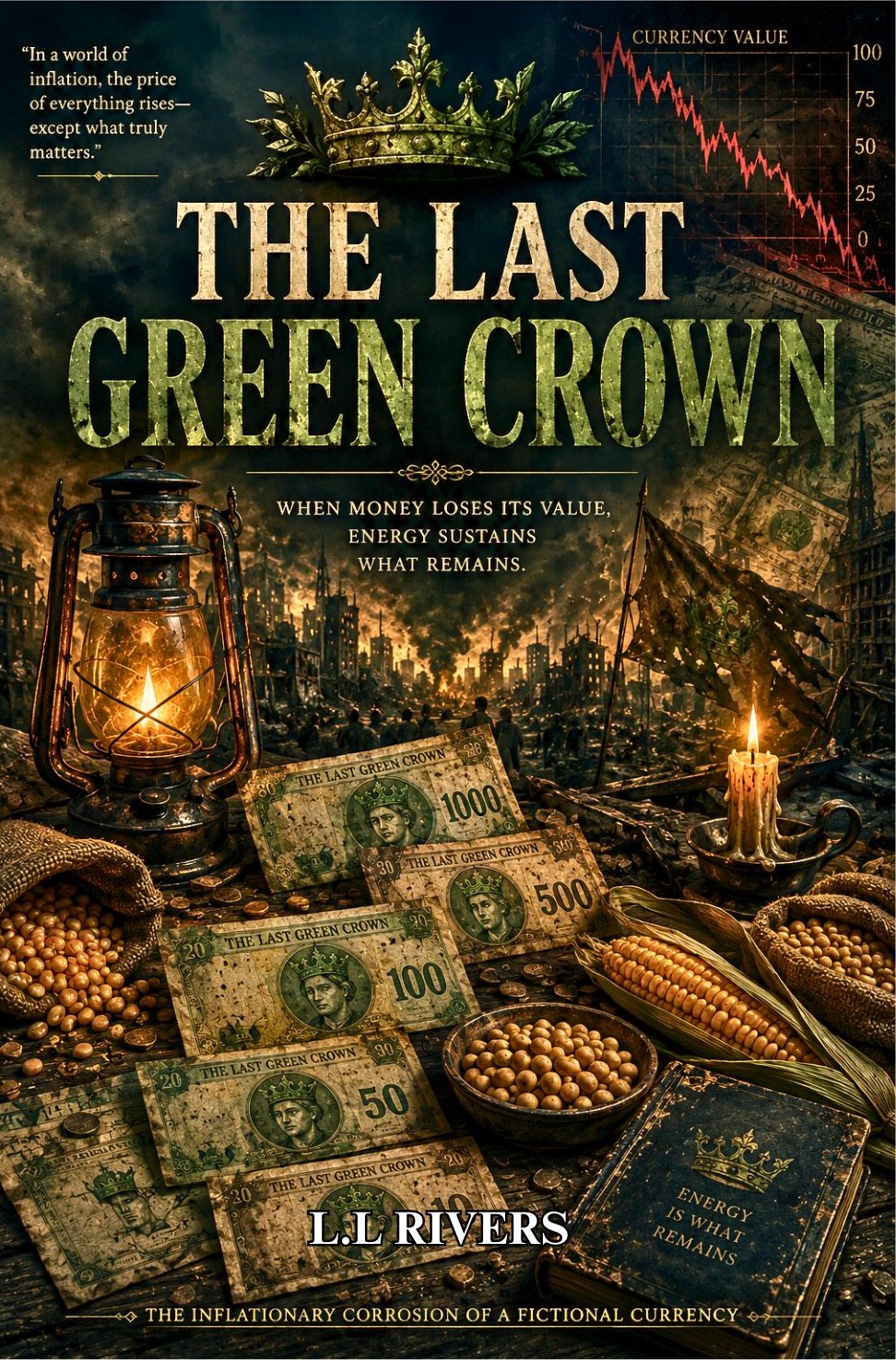
The Last Green Crown is a work of speculative fiction exploring the collision of monetary transformation, geopolitics, technological acceleration, individual freedom, and spiritual conscience. It is a story about the systems humanity creates, the power those systems acquire, and the values that must survive their transformation.
The future does not arrive all at once. Sometimes it begins when the familiar quietly stops working.